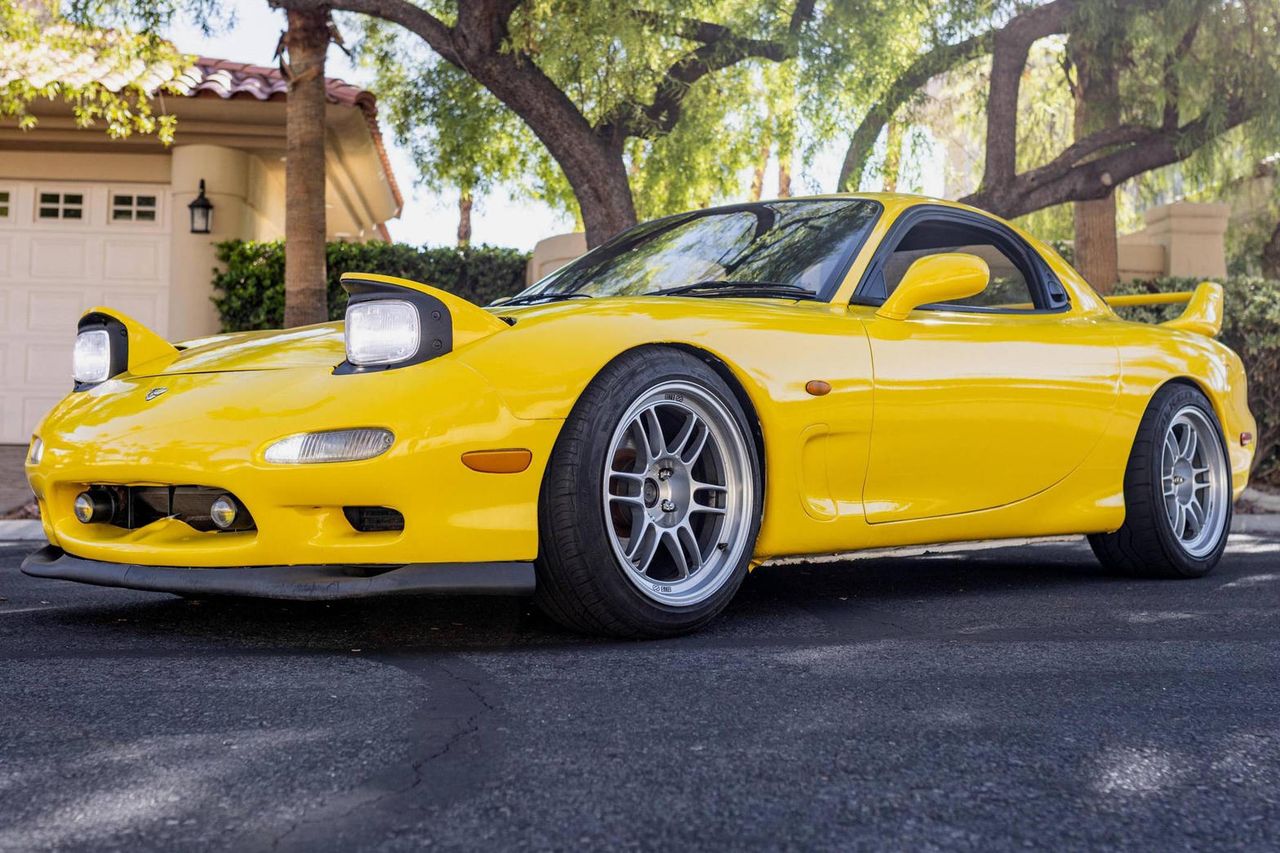
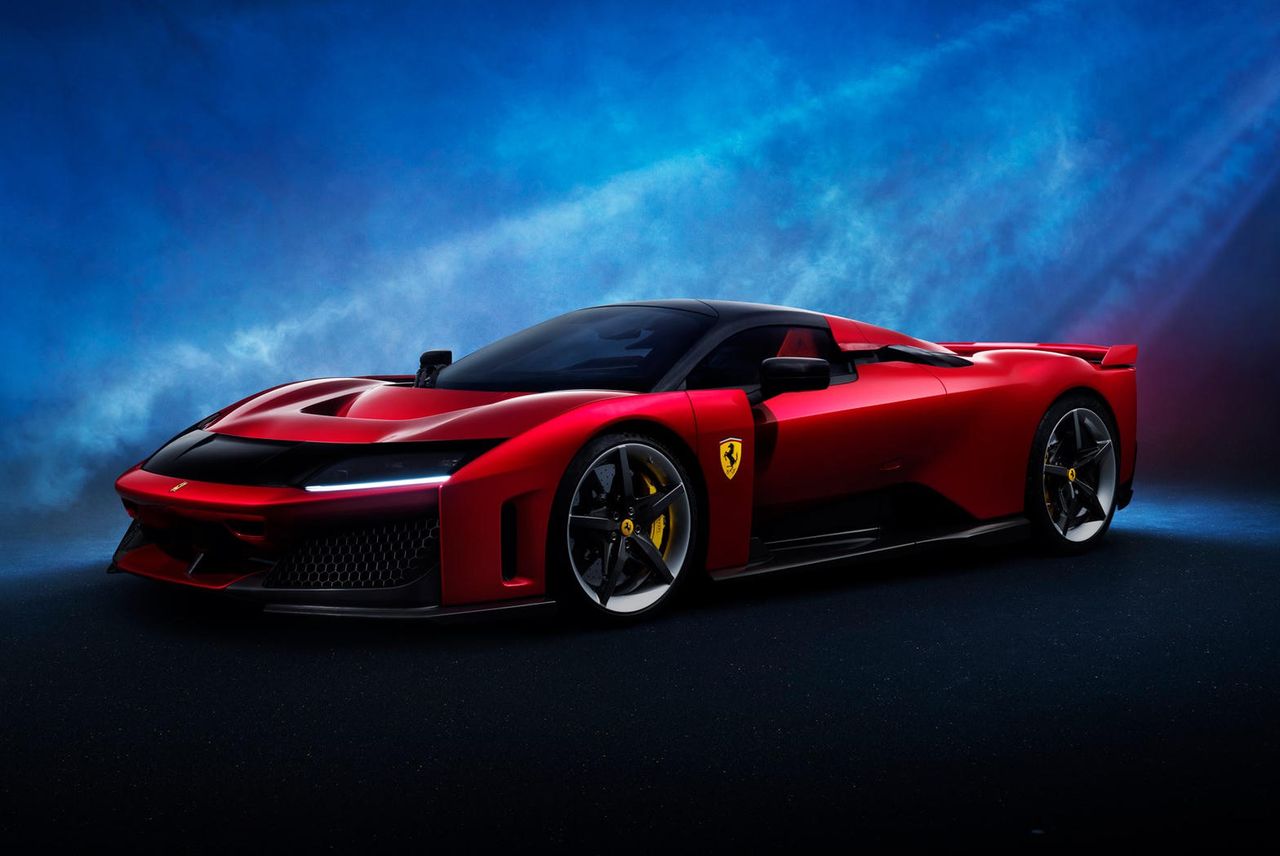
Grandpa had a classic. You were small. The seat was high, the windows were down, and something about the way it moved has stayed in your body ever since. Now your friends and family can ride along as you relive that experience.
Just as an artist requires a blank canvas to realize a work of art, to model a vehicle requires a similar canvas: a torque canvas. By using the broad and plentiful torque of a high-power EV, we can exactly duplicate the power characteristics of any vehicle that is less powerful. If it moves and it fits under the curve, it can be simulated. That collection is large. It encompasses thousands of historic vehicles, JDM legends, classic muscle cars, halo cars in limited supply, cars that have not even been produced yet, motorcycles and other machines that fit, and the one you rode in as a child.
This was not possible before. A gasoline engine is the painting and the canvas at once. It only has as much torque as it has, and only where the cam, the turbo, or the supercharger allows. You cannot ask a Mustang to become an RX-7, and you cannot ask either to become grandpa’s car. A video game or a stationary simulator can show the car and play its sound. Neither puts real acceleration into a driver sitting in a moving vehicle. A dyno can measure a car. You do not take it to dinner. Chill mode is a dimmer. It is not the real life experience of a car with a soul.
A high-power EV is the first road car with leftover torque at every speed — a wall of it, from a stop, before a piston engine would even be on the cam. That leftover is the blank page. Slow Car Simulator paints by subtraction. At every instant we command only as much of that wall as the subject could have made. The rest is left unpainted. If the subject fits under the host, the match is not an impression: it is exact. You are not watching a simulation. You are sitting in one. The road is real. The g-force is real. That is physical simulation.
With a broad torque canvas we can simulate a massive library of cars, all of them, precisely. We capture the quirks, the soul, and the exhilaration: the rush of a turbo reaching full boost, the instant snap of a supercharger, tires that smolder on the launch, and break free and paint stripes on the upshift because of a big block V8, the song of a rotary whose power climbs toward a seemingly impossible redline. Test-drive any of them for the thrill. Daily-drive any one of them because you miss it.
Are you a manufacturer? The canvas is for license. One floor car becomes every trim. A microwave becomes a garage of your own legacy — and still unlocks the wall on Saturday.OEM license.
The blank canvas is beautiful because it presents possibilities. You can dream anything, and if it fits, it can happen. An unbounded torque canvas makes almost any car possible. A Tesla is not the subject. It is the canvas.
01
The torque canvas
A high-power EV has leftover torque at every speed — a wall of it, from a stop. That wall is the blank page. We never add power. We paint by subtraction: at every instant the host is commanded only as much as the subject could have made. The rest is left unpainted.
02
Any true picture of the car
The subject can be stored as g-force, an engine dyno, a chassis dyno, horsepower and torque, a timeslip, a coast-down, a pedal map, or a log from the real car. Any one is enough. Combinations improve the painting. They are not required.
03
If it fits, it runs
If the subject’s curve and times sit under the host, the match can be exact. Cars first. Motorcycles, boats, a jet ski, an airplane on the takeoff roll — same rule. If it pokes through, it stays visible and locked. We will not fake a halo the canvas cannot hold. Upgrade the Tesla, lighten it, or admit the simulation cannot be exact.
04
Slow the car. Never speed it up.
The limit can live at any one layer: the accelerator, a CAN frame, the command sent to the motors, the inverter itself, pack current, a limit-only servo the driver can overpower, or a floor-it-on-GO profile when live telemetry is not yet available. One layer that actually slows the car is a complete product. Combinations are optional. Commanded demand never exceeds what the driver is asking. Fail-safe is pass-through of the raw pedal.
05
Soul is the holes in the curve
A dimmed Tesla is still a Tesla unless we also paint what the subject would have lost: FWD or RWD wheelspin, the torque hole in a shift, clutch slip, wheel hop, turbo lag, the rev limiter, driveline lash. Those imperfections are the soul people meant. The excuse is not.
06
Clutch, gears, and the money shift
A selector and a clutch pedal — temporary or bolted, over CAN, wire, Bluetooth, or Wi-Fi — feed the same model. A DCT subject uses paddles and no clutch pedal; shifts are quicker. Clutch in is electrical neutral: no drive, no regen, brakes still live. Dump it and you launch on the tires you actually have. Miss a five-to-three and the subject engine is finished, in the model. The Tesla is not. Watchdog restores drive and regen.
07
Hear it. See it. Shift it.
Preferred sound is samples of the actual subject car, licensed when the brand is not yours. Synthesis is the fallback. Gear events follow simulated rpm from host speed, acceleration, or motor speed through a virtual gearbox. The host remains single-speed. The cluster, the center screen, the HUD, and the shift lights reskin to the subject. True speed and real warning lights stay. Exit restores the Tesla instruments.
08
Race it. Then unlock the canvas.
On the strip, the unconstrained Tesla and the subject run on the same clock. Live split. Margin of victory. When the host is finished, the subject is still coming. Then you unlock the Tesla you are actually sitting in. The gap is the product. The same host can also become a slower Tesla — test-drive a Model 3 by slowing a Plaid.
09
Closed course, if you arm it
Optional, default off, two-step enable: e-brake, drift, understeer and oversteer you can feel. On the road, steering weight is gentle and stability control stays on. Longitudinal canvas does not require any of this. The preferred, fully developed painting includes it.
10
A selectable soul
Test-drive a legend. Daily-drive the one you miss. Build a car that never existed from engine, weight, and drivetrain you can conceive — if it fits, it runs. Manufacturers: see OEM.
This site is the garage, the canvas proof, and the strip. It does not yet move a car. The Control stack is the architecture for when it does.Patent Pending. U.S. Patent Application No. 64/143,047.